A Picture is Worth A Thousand Words. Video Even More.
| 3-4 min read plus video
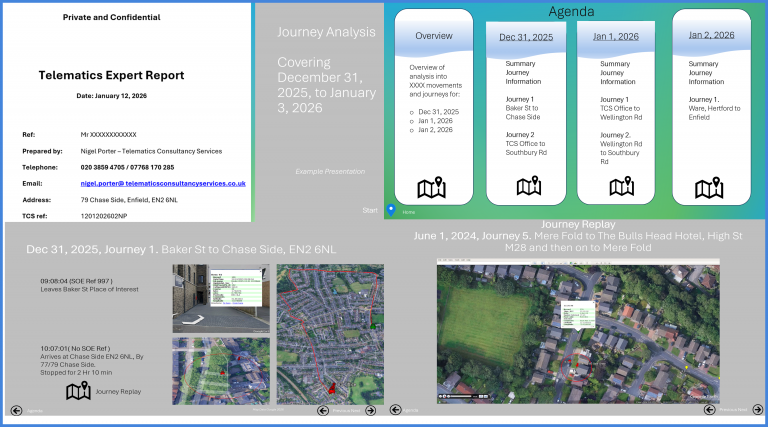
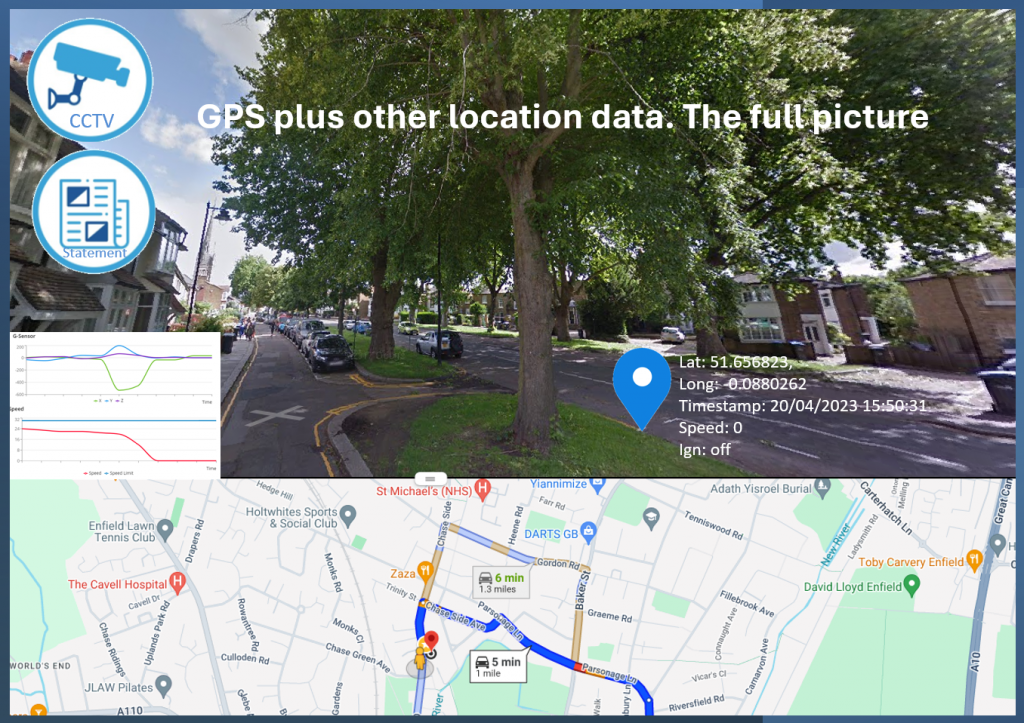
Complex, multi-event scenarios can be conveyed more effectively by a single still image, and adding video further clarifies telematics and GPS data, offering a clearer understanding than a written report.
As telematics data used as evidence in both criminal and insurance cases becomes more complex, with data available from multiple sources, the need to convey the results of any data analysis clearly and concisely is greater.
Interactive presentations with images and video provide clarity and context.
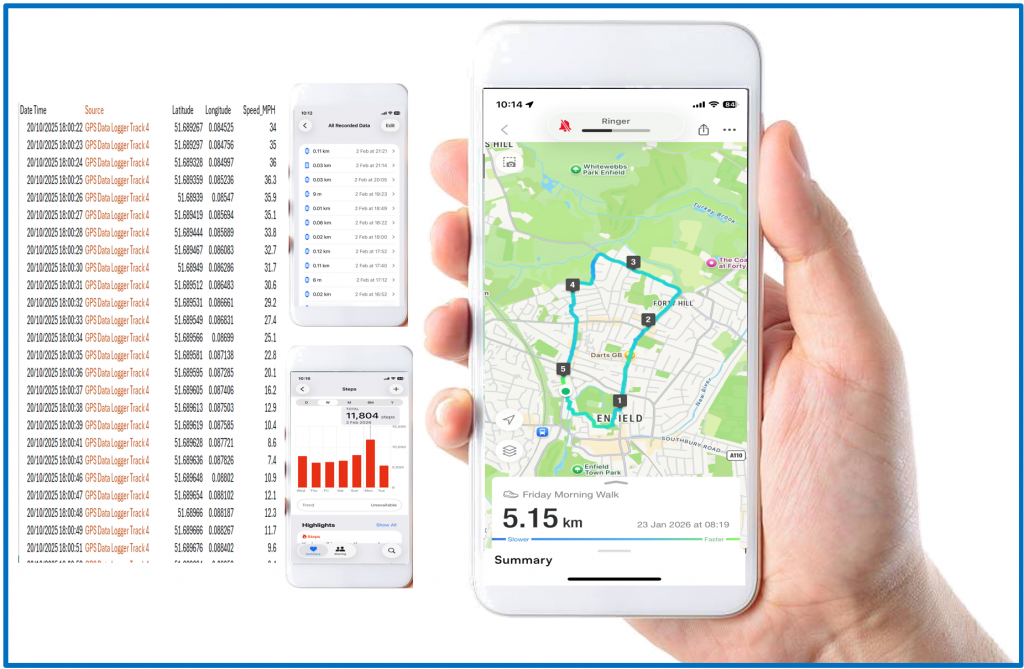
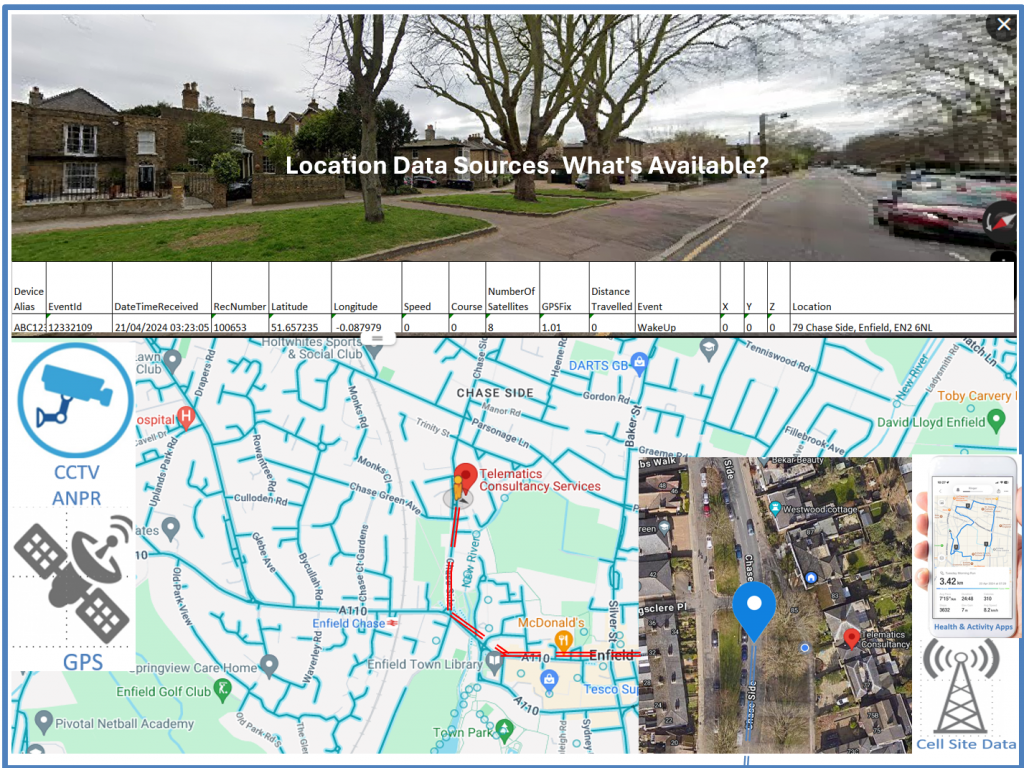
Many health and activity applications are available for iPhones and Android smartphones, many of which record location data from the phone’s GPS.
The data can help by cross-referencing against other location data, and even the number of steps taken can indicate movement from one location to another.
Location-related mobile device evidence is increasingly used to address questions in criminal investigations, and an expert witness can help answer those questions.
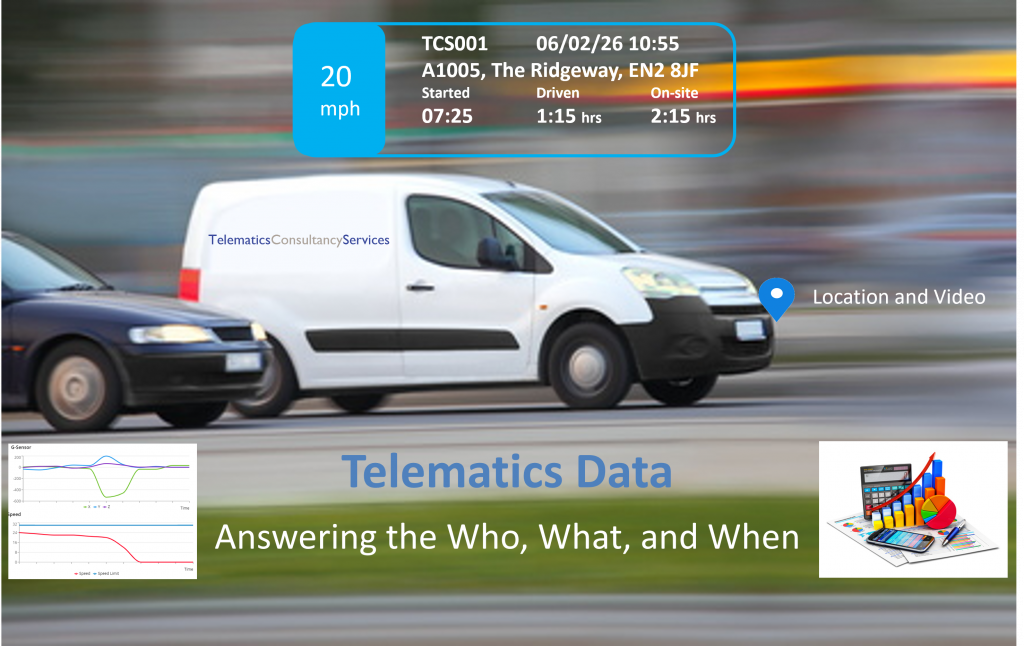
Telematics Data Evidence. Answering the where and when.
| 4-5 min read
In today’s location-dependent world, telematics, location-dependent information and vehicle status are with us all the time.
Smartphones with GPS, satellite navigation in our cars, dashcams and vehicle tracking systems for safety and insurance requirements are standard in modern vehicles, which also include Automotive Telematics.
So, for evidential purposes, how do we answer the “where” and “when” using this complex data source?
When should you speak to a Telematics Expert Witness?
| 2 min read
Knowing when to consult a telematics expert witness is essential. This is particularly important in a legal case or situations involving telematics, vehicle tracking, or location information.
Modern vehicles now contain computers, typically called ECUs, to control functions such as infotainment, Satellite Navigation, SOS emergency call services, driver assistance systems, airbag control modules, and connectivity with smart devices for voice and messaging communications.
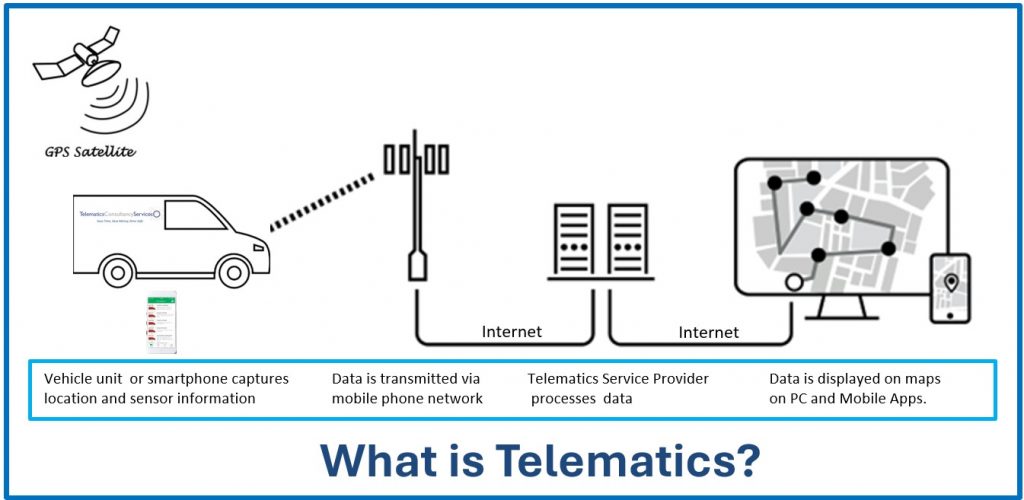
The term Telematics refers to several types of applications, such as Commercial vehicle tracking and insurance telematics. It is worth understanding the basics.
In many conversations, before we are formally instructed as an Expert Witness or Advisor, we discuss the available data and its suitability.
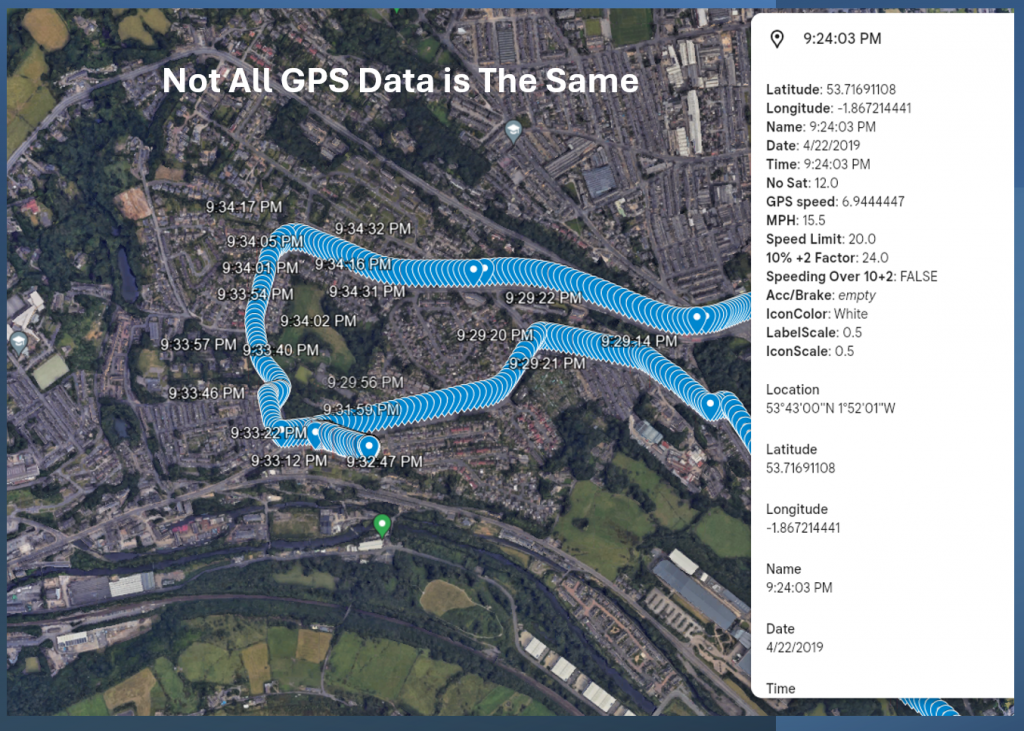
Just because a file, in any format, contains GPS location data (latitude & longitude) does not mean a detailed, accurate record of a person’s or vehicle’s location is available.
GPS data files and visual representations of GPS location data on maps can, in many cases, only support analysis from a single viewpoint. Where was the vehicle or Smartphone at a specific date and time, and what was its activity before and after that date and time?
Accelerometer Data (XYZ) and Driver Behaviour Reporting.
| 3 min read
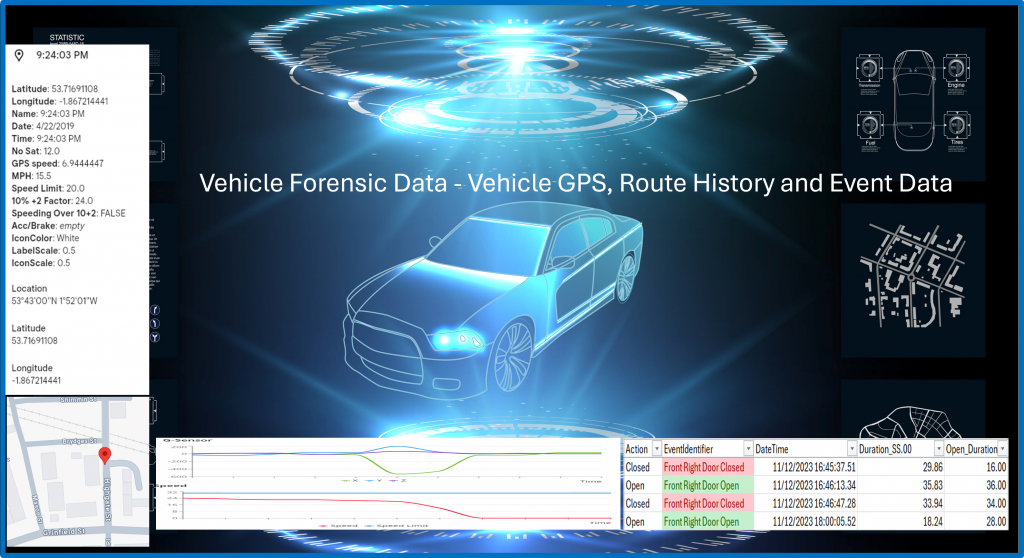
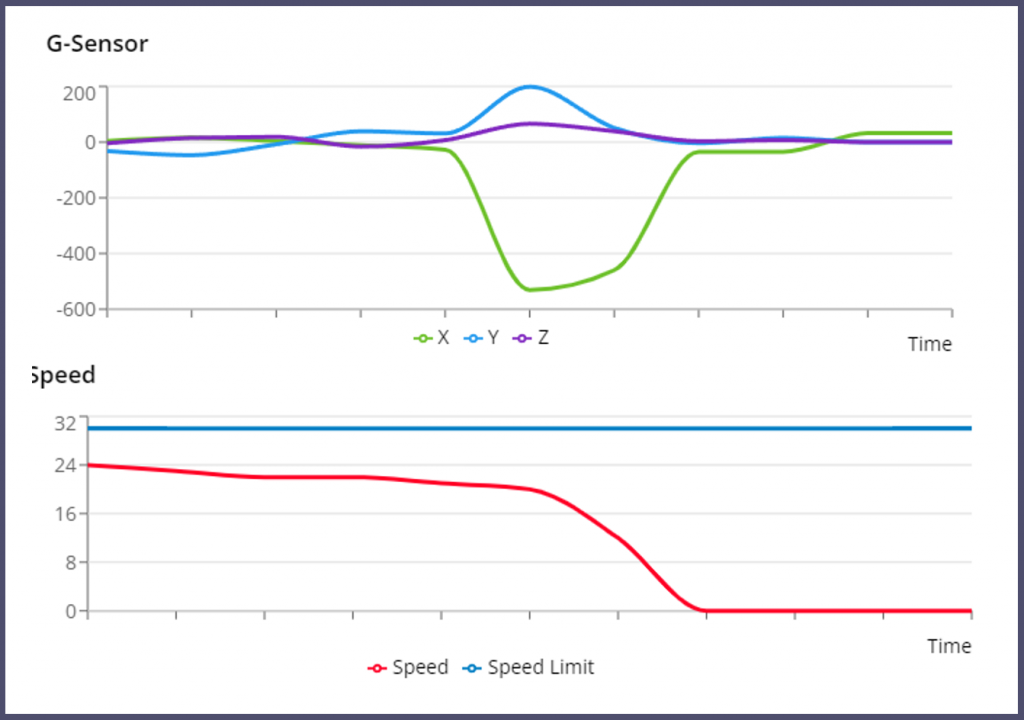
Many commercial Telematics and Insurance Telematics solutions capture accelerometer data to calculate Driver Behaviour reports and automatic alerts in the event of a possible collision.
The data can be crucial in determining a vehicle’s activity leading up to a collision.
Although Telematics/Vehicle Tracking-generated GPS location data is the primary source for an Expert Witness report or expert advice when analysing a vehicle’s location, there are several alternative sources of location data. Each has its advantages and disadvantages regarding data accuracy and the frequency of location data recording.